
“I like a piece bulging and sort of limp. It has to have some tension or else it will look like a big snake that’s swallowed a bunch of pigs.” – Wendell Castle
 window of the plane banking over city on final approach. It gave
  me a chill: Goth wings reaching up, so-called “Wings of Progress,”in ribbed aluminum, oxidized and black, anchored to ornate grille-work, vaguely sinister like Batman’s Lair, looming over this city that once prospered on wheat and optical equipment. We drive to the studio first, a former soybean mill on Maple Street, built in the 1890s, clad in cedar shingles. When he bought the building in 1968 there were a thousand mice in residence so he got a cat. He also added a porte-cochère, an L-shaped addition and further improvements, as the spirit moved him, until it grew into the 15,000-square-foot hive it is today. Dust-flecked light filters through a window in the big
  studio. Walls are white and floors a pale concrete strewn with wood shavings. Ideas flow freely here. Large drawings are tacked to boards showing future projects, simple outlines drawn in Magic Marker. Benches are covered with chisels and mallets, spoke shaves, small-scale models made from clay or foam, and clamps in every size and shape, hundreds of clamps. There are drill presses, long-bed jointers and a monstrous L. Powers band saw made for building ships. Castle moves about easily, shifting an unfinished piece of furniture, touching one of the hydraulic chisels, and despite the silver hair, he seems like a much younger man, trim and fit from carving and lifting heavy slabs of lumber. He stops and stands for a moment as if about to say something, but then moves on silently. There’s no particular sense of urgency. He employs six full-time
 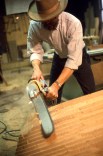 assistants but continues to carve many of the pieces himself, especially when it’s the first in a series. “It’s important that I stay involved,” he says. “I can make decisions along the way.” He leads me through a series of spaces that unfold like the chambers of a Nautilus shell, dusty and lit from flickering fluorescent tubes, connected by darker passageways, steps or ramps that go up and then down again. How many rooms in all? I make a mental count of twenty-something but suspect there are probably more and at one point feel as if I’m waking through the convoluted synapses of Castle’s own brain. I follow him upstairs through more workshops, a room with a fireplace and billiard table, into yet another studio where assistants are making tables from
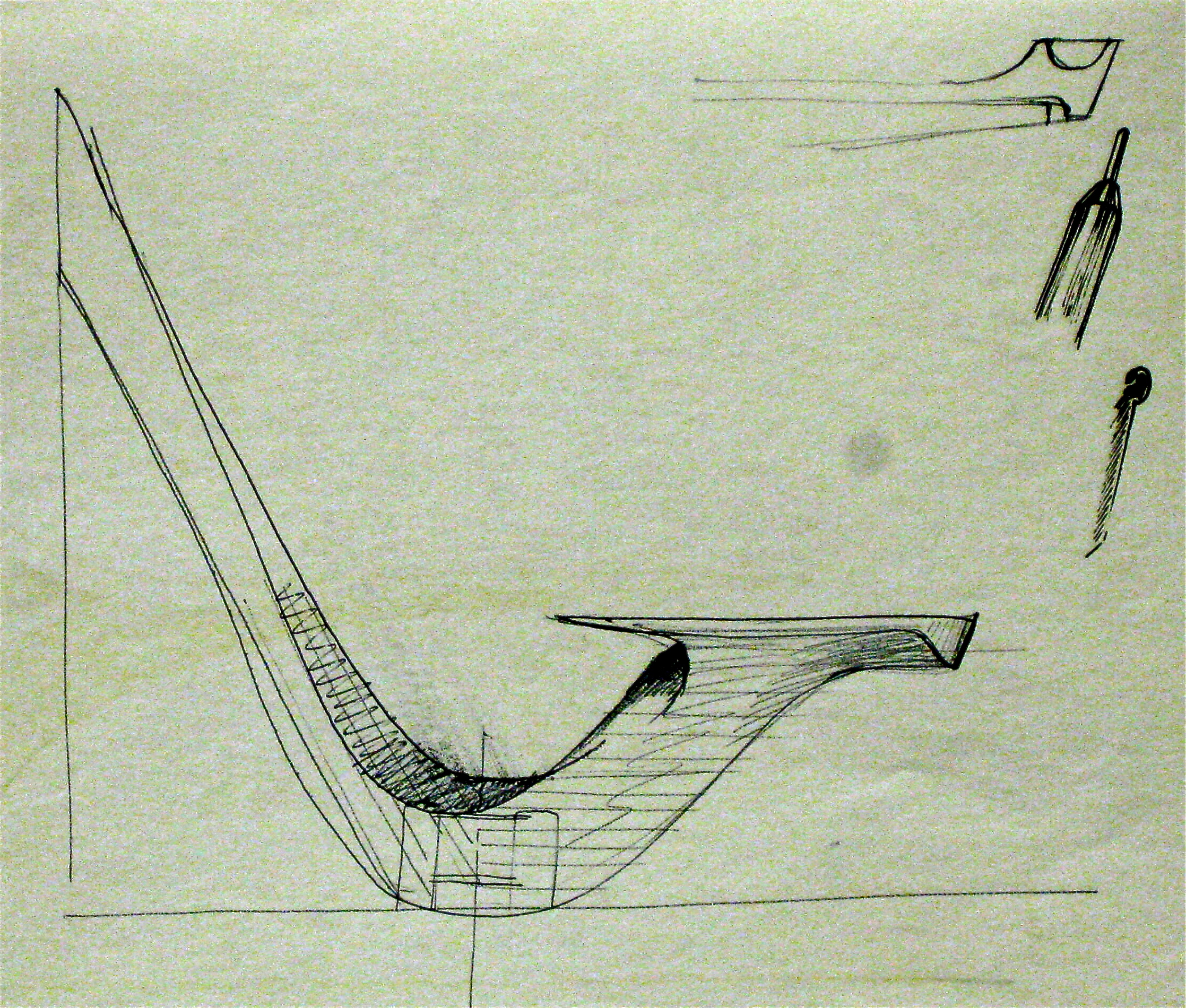
 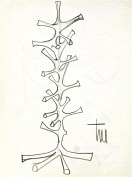 laminated plywood infused with red epoxy. “I’m always thinking as I draw,” says Castle who crouches to open a dusty cabinet.
 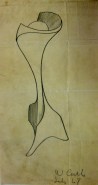 (We’ve entered a cramped little office on the upper level.) “My drawing table is like a retreat,” he says. “That’s where it all happens. I draw a little every day and my drawings are the starting point. I would never just start to carve a piece. I come into the studio on Saturday morning and I don’t answer the phone. I just draw. It’s always been that way. The moment of discovery.”
His early work was skeletal and spindly, a kind of 3-D calligraphy in space, made from strokes of bevelled wood in place of ink. Two stools received attention for being more like sculpture than furniture and set the tenor for a career that would always waver between utilitarian and aesthetic. The stools were made from recycled gun stocks mitered and dowelled  like bones with forked appendages and crutch-like arms. Priscilla Chapman of the New York Herald Tribune described
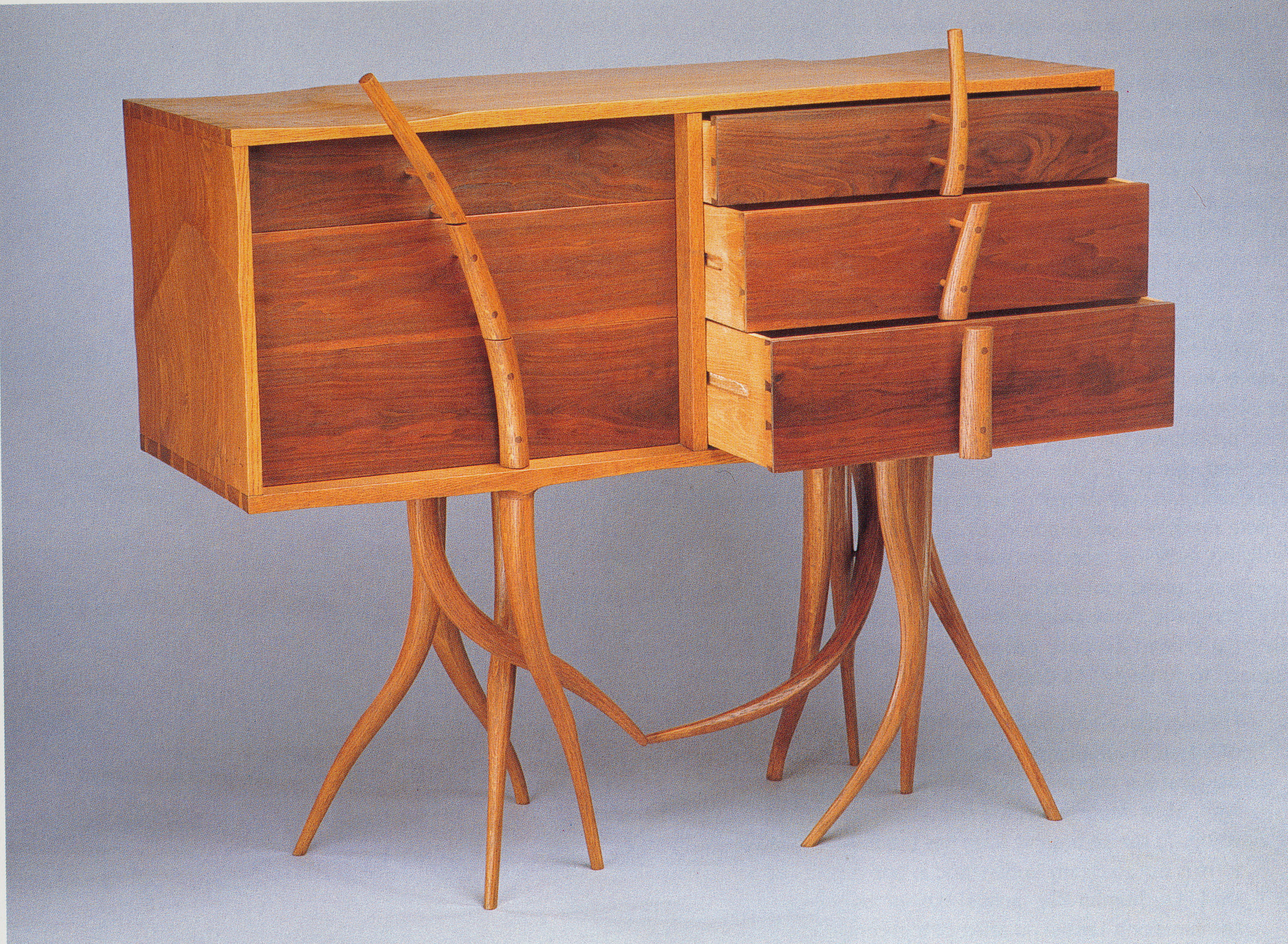
 one of these early experiments as a “mad, branchy piece of wood sculpture designed on the principle of a child’s high chair,” but questioned whether it could be used for actual sitting. There was a coffee table with legs that Castle carved into smokey ligaments reaching around a vermillion slab that hovered on top like a surfboard. A chest of drawers from 1962 rested on six wavering, twig-like legs, two of which extended up to become pull handles
  for the drawers. By the mid-1960s the work began to bulk up with oak and walnut lamination that sprouted outward like hollow gourds. A cherry-wood blanket chest from 1963 was plump and expectant but also mysterious and withholding, the very opposite of those lanky, anorexic stools he’d been making three years earlier. It might have been a ripened cherry or a “fantastic species of giant seedpod,” as one critic described it, perched on a bulbous base and could be opened by pushing a three-fingered handle sprouting, oddly, from the top.


Stack lamination is a slow, thoughtful process–cut, plane, glue, clamp–one layer at a time, imitating the growth or re-growth of the original tree from which the planks were milled in the first place. “I like the idea of sort of gluing wood back together into a tree trunk–reconstituting the thing you’ve torn apart–the way it expands at the bottom, the way roots spread out and support the furniture,” says Castle. “How does a tree do it? This is something that always appealed to me. So did the opposite idea where theoretically the thing wouldn’t stand at all because it didn’t have what it needed at the bottom. The idea of opposites is something I like a lot,” he says. “I made a piece that had twelve legs and shortly thereafter I made a piece with only one leg.” A lateral, drifting motion began to appear in the late sixties in leaf-shaped
 tables and settees, doublewide benches with wishbone legs, tables that split and stretched or bloomed like broad-lipped petals. “In a sense, I was trying to disguise the fact that it was furniture but not to the point where it couldn’t be used,” says Castle whose dealer, Lee Nordness, compared the new work to wandering, attentuated organic forms. Table bases resembled tree trunks, expressing the flare or “buttressing” of an oak, as if rooted in the floor. Tops were elliptical or clover-shaped with indentations and other irregularities. Further breakthroughs came through improvisation, as with a petal-shaped coffee table (1966) in rosewood with a wrinkle and elliptical perforation in the middle, one of his more graceful forms, that opened to reveal itself with both horticultural and erotic subtleties: a
  base that flared like a peduncle unraveling into an expanding ovule, around which spread the lobe or petal, recumbent and accommodating, something like a lily pad on water, caught for a moment in the process of becoming something else. Library Sculpture sprouted a table and two cantilevered, tub-like chairs, while the central trunk had to be anchored to the floor with bolts. “Tree-Like Form Sprouts Chairs,” read a headline in the Detroit Free Press, as if Castle’s hybrid creation was a freak of nature, a Frankenstein of furniture. Was it art, or furniture, or an ecstatic happening in wood?
 “Furniture would grow out of the ceiling and out of the walls,” said Castle after making Wall Table No. 16 in 1969 and would do just that with two operative “bases,” one anchored to the floor, the other to the wall, challenging all suppositions about what a table was supposed to be. His total-room concept came close to fruition in a suite designed for dealer Nordness where eight separate components flowed like parts of a single organism: crescent sofa suspended from the ceiling and curving in harmony with an elliptical coffee table, a bench, stools, standing lamp, drooping bookcase and combination table-chair. The period from 1968 to 1970 was a particularly fertile plunge into the unknown. Stand-alone pieces transformed themselves into multi-partite constellations and free-form human landscapes. A bed became a tree, became a giant beanstalk, became a
  shell-like desk with cantilevered couch, suggesting new ways to inhabit three-dimensional space. For one client, Castle carved a sleeping platform with elephant-stump legs and a tear-drop desk that looked like a harbor encircled by a ridge of hills. A lamp rose from the far shore of this dreaming machine like a lighthouse beckoning the sleeper back from the edge of unconsciousness. Enclosed Reclining Environment for One was a blob-shaped chamber carved from laminated oak that could be entered through a little Hobbit doorway. The snugly shaped interior was
  padded with foam rubber and upholstered with a natural-colored Flokati rug allowing just enough room to enfold a single person in soul-searching solitude. “When you get inside, it’s almost like being in your mother’s womb,” said one visitor. Another compared it to a “free-form coffin.”
Two hours later, Castle collects me for lunch and we drive up Maple, past the Connor Elementary School, quaint two-story houses, neatly fenced yards, overhanging elms—Anytown, USA–to Oakwood, through hand-crafted gates into a rolling estate with orchards and gardens that slope down to a river valley. It’s a surprisingly grand 19th-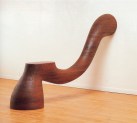 century manor with a greenhouse at the back and inside, a compilation of rough textures, tufted handmade things, un-curated rooms with early wood pieces by Castle, ceramics by his wife Nancy Jurs, musical instruments and artworks by friends, all cluttered into a living collage. Just after dinner, Castle hauls out a battered old guitar and a handmade ukulele and starts strumming. At times he appears shy and reserved in a Midwestern way, but now falls eagerly into Woody Guthrie’s “Do Re Mi,” then stops to pour us both a whiskey. I pick up the guitar and sing “Helpless,” and am about to slide into something by Dylan when Castle storms into “Hobo’s Lullaby,” followed by Guthrie’s
 classic “So Long, It’s Been Good to Know You,” singing with such passionate intensity that I lean back and just listen, feeling as if I’d drifted into some union gathering of the 1930s. A dust storm hit, an’ it hit like thunder; It dusted us over, an’ it covered us under; Blocked out the traffic an’ blocked out the sun, Straight for home all the people did run…
There’s something in the work that’s restless and moving, like the sea, like the Great Plains, and I think of the dust-bowl ballads he sang that night and how he was born in the flatlands of Kansas where horizon frames sky and he grew up drifting from town to town, Emporia, Staffordville, Blue Rapids, Coffeeville, his father teaching vocational agriculture, before settling in Holton. “I was the leader of the neighborhood gangs for building tree-houses out of scrap wood,” recalls Castle, and while his work is decidedly modern, there’s something grass-fed and unvarnished, a vulnerability and laid-back  slowness that’s very much in the American grain. Thoreau wrote: “In wildness is the preservation of the world,” and Castle’s best pieces have a measure of that wildness in their methodically carved, hand-rubbed forms. One recent piece, called “Moby Dick,” has a backrest perforated with holes bored at different angles and I can’t help wondering if they represent harpoon wounds or blowholes of the title’s subject: the unattainable American Myth, the White Whale itself, Melville’s conundrum of hubris and predestination. “I’ve always been drawn to the Transcendentalists,” he says. “I like ambiguity and things that are mystical.”
We’re sitting in a local restaurant and he begins to sketch something on a paper napkin that looks like a kidney with lips and bandy legs. “Sometimes I just draw a shape, an egg or a blob, and see what I can make out of it. I enjoy going to work every day,” he says, pausing to peer up through his blue goggle glasses. “I’m not even interested in vacations. I’m on vacation all the time.”
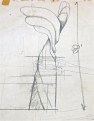
A few days later, heading back to the airport through stubbled fields and subdivisions on Scottsville Road (Rt. 383), I remember the sketch I’d seen in one of Castle’s notebooks: two wings, reaching up as if unfurling, drawn in 1973 as a newel post to be carved for the Gannett News offices on East Main Street. Castle’s wings are less forbidding with twisted fluting that culminates in a billowing, almost cartoon-like flourish, but there’s a similarity to Ralph Walker’s Wings of Progress and it makes me think how Rochester must have etched it’s way into Castle’s psyche over the years, just as Castle’s changed this city and become a landmark in his own right, certainly as much as Walker’s sullen skyscraper. Even the bourbon-swilling banker sitting next to me on the return flight knew about him.

These are outtakes from Wendell Castle: Wandering Forms, a survey of W.C.’s work from 1959 to 1979. The book has been published by Gregory R. Miller & Co. in conjunction with a retrospective exhibition at the Aldrich Contemporary Art Museum in Ridgefield, Connecticut. It is now available for purchase in stores and at Amazon.com. The exhibition will run through February 24, 2013 and was curated by Evan Snyderman and Alyson Baker.


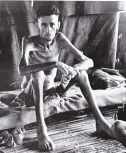 Stumble across diary entry of Scottish M.O. named Hardie, written at Takanun, not far from here, mentions Father by name: September 13, 1943: The rail-laying party reached this camp six days ago and has passed on upwards. The track is now being strengthened and titivated. Captain Gordon of the Argylls, who walked down here the other day from a camp 10-12 kilometers higher, passed three skeletons and two decaying Tamil corpses on the way. Scan through rest of diary but can’t find another mention of Captain Gordon, just the single, fleeting glimpse, stunned by such an appearance and wondering why Father was walking down the line like that, a character in someone else’s narrative. Who were the decaying corpses? Who were the skeletons? (Learn later that Hardie was gathering facts about atrocities, keeping secret count for International Red Cross and eventual War Crimes Tribunal.) Had to look up “titivate” which means to make neat, smart, or trim, and afterwards dream of Father walking through


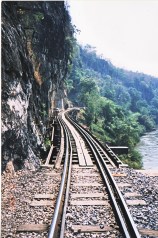 Rebuilt section of line operates for tourists now and we cross a viaduct made from rough-hewn logs, semi-vertical baulks lifted into place by the scarecrow men. Father looks pale and wobbly himself so I ask him to sit on bench in shade of cave in side of hill. Buddhist shrine in back, strewn with flowers and incense–another world altogether–and from there, overlooking river, he makes a sudden and unwanted connection to past: Five fellow officers were executed on the spot, near cave, and he was forced to watch, thinking how it might have been him if he hadn’t been weak from fever and unable to join escape party. God, how benumbed and broken I feel in shadow of his War, like the child to his looming presence and survival stories at dinner, in Princeton, around big mahogany table with silver bowls, nauseated by so many scenes of torture and
 hanging, burning bodies, can you pass cranberry sauce? Old friend of mine says all periods of history press down on us at same time, including present and future–How strange it is, to be standing leaning against the current of time (W.G. Sebald)–and I can see how time is pressing against Father’s chest and shoulders, almost crushing him into the floor of the cave, forcing him to relive that day in 1943.
 I turn down Songkwae Road skirting river to point where all three branches converge: Meklong, Kwae Noi and Kwae Yai. Run into mob of workers from some suicide factory in Southern Fujian who’ve been bussed in for cheap holiday but don’t understand what to do with off-time except mill back and forth across Bridge in packs, barking in Hokkien dialect, pushing everyone out of the way, eager to enhance their single day of leisure. Woman carrying newborn baby and birdcage has no problem negotiating precarious passage, tiptoeing over open ties while still taking photos, spitting, bouncing baby, and never being crushed by train that crosses every five minutes. Has she even seen David Lean’s movie or read Father’s book? (Doubtful.) I attempt
  to walk in opposite direction, against primary flow–from Kanchanaburi to Tamarkan, instead of other way around–but get stampeded, almost shoved into river, before turning back. Entry scrawled in notebook that afternoon: Never, ever, try to cross Bridge on River Kwai, Chinese New Year, Year of Dragon! Allied flags hang limp over gateway to JEATH War Museum next to Wat Chaichumphon, like miniature version of Bridge, and while called “museum,” it seems more like freak show. (“JEATH” stands for Japan, England, America, Thailand, Holland with Japan getting first billing.) I walk past fake guard tower into long bamboo hut with attap roof and sleeping platforms, very hot inside, fan blowing against photographs stacked haphazardly along walls with scenes of pyres, starved men lifting logs, captions misspelled. Display cases hold war memorabilia, spent shells, rifles, bayonets and something called “True Map of Death Railway.” A blue-and-red steam engine in yard once pulled freight along same Death Railway and there’s also a boxcar with naked POW behind iron bars like monkey in zoo. (Revenge of formerly oppressed?) Another gallery has life-sized figures of POWS in plaster, crumbling and
  painted over with murky flesh tones. Group of tall Norwegian tourists file out of bus, look at torture scenes, shake heads, get back on bus and go to Sai Yok or some other package deal: river rafting, eco tour, elephant ride, waterfall. River Kwai is just another pop destination, cheaper than Phuket, and why not? Auschwitz has its own kind of atrocity tours. Once a year there’s Disney-style son et lumiére at Bridge with smoke and laser beams, strobe lights, pyrotechnic explosions and sound effects to recreate Allied bombing of 1945.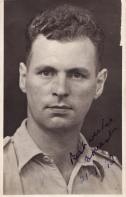

 Alastair Gordon